
Every category develops its own unwritten rules. Olive oil arrives in transparent bottles. Craft beer leans heavily on hand-drawn illustrations. Beauty brands often default to minimalist packaging and muted colour palettes. And in some categories, almost nothing changes at all.
Take a four-pint carton of milk. It looks much the same as it did years ago because consumers recognise it instantly and know exactly what they're buying. Could someone reinvent it? Probably. Should they? That's a different question entirely.
Not every category convention deserves to be challenged. Some exist for good reason. They help consumers navigate crowded shelves, reduce purchase risk and make decisions faster. The problem comes when conventions stop serving consumers and start serving competitors, creating a sea of brands that look, sound and behave exactly the same.
The most successful challenger brands understand that standing out isn't about being different for the sake of it. It's about recognising which category norms are worth keeping and which have become barriers to distinction. Rather than simply breaking the rules, they rewrite them strategically, creating brands that are more memorable, more relevant and ultimately more valuable.
At Noramble, we specialise in brand design, brand strategy and packaging design for businesses that aren't interested in following the crowd.

Before we start talking about challenging category norms, it's worth recognising why they exist. Conventions develop because they really help consumers in making decisions and navigating crowded markets. These conventions (whether you realise it or not) help us collectively to quickly understand what a product or brand is offering.
The problem isn't that categories have rules. The problem is that over time, those rules can become so widely adopted that the distinction disappears. Understanding where conventions add value and where they don’t is the first step towards meaningful differentiation.
As consumers, we make thousands of decisions every day, and would you believe that most of our purchases don't actually receive a great deal of conscious thought? Instead, we rely on psychological mental shortcuts to navigate these categories quickly. So the likes of packaging, colour, language are all visual cues that help us understand what a product is about, who it's for and whether it fits our needs.
That's why certain patterns emerge within categories. We're not suggesting there's a secret branding rulebook that every business follows, but when enough brands make similar choices, clear conventions start to form. Consumers learn these patterns over time and use them to make fast decisions.
You’ll know what we mean:
These signals help consumers make sense of crowded shelves and busy online marketplaces.
Familiarity also reduces perceived risk. When a product looks and behaves in ways consumers expect, it feels safer to buy. This is particularly important in categories where customer trust plays a huge role in purchase decisions.

The challenge is that successful conventions rarely stay unique for long. When a market leader finds a winning formula, competitors often follow suit. Over time, what started as a distinctive advantage becomes a category standard.
The result is a cycle of imitation. Brands adopt the same visual styles, repeat the same messages and chase the same brand trends because they're proven to ‘work’. But to what degree does it actually work? Because eventually, those once-distinctive choices become expected and that’s where cliches stop working.
Some of the most common category conventions include:
None of these approaches are inherently wrong. The problem arises when every competitor makes those same decisions.
As brand and packaging designers, this is where we start to get interested. Not because we believe every category convention should be challenged, but because the strongest brands are rarely built by following the crowd. If consumers can scan a shelf and struggle to tell one product from the next, something has gone wrong.
That's why we're always looking for opportunities to create distinction rather than repetition. Not for the sake of creativity alone, but because memorable brands are easier to recognise, easier to recall and ultimately easier to choose. The goal isn't to ignore category conventions altogether; it's to identify where they help and where they've become a shortcut to looking exactly like everyone else.

As categories become increasingly homogenised, brands begin to lose their ability to stand out. Products become harder to remember, emotional connections weaken and differentiation shifts towards price rather than preference.
When consumers struggle to see meaningful differences between brands, they often default to convenience, familiarity or cost. In those moments, even great products can become interchangeable and that’s a real shame.
And that has a commercial impact. Companies with strong, consistently managed brands can see up to 33% higher revenue than those with inconsistent brand presentation. But consistency doesn’t mean staying frozen in time. If your brand never adapts to new channels, shifting expectations or changing customer behaviours, it doesn’t stay consistent. It starts to feel out of date.
Category conventions help consumers make decisions. Category clichés, on the other hand, make brands forgettable. The difference between the two is where the biggest opportunities for challenger brands often exist.
We've seen this firsthand with clients operating in heavily saturated categories.
Take Flavadent, for example. The teeth-whitening market is crowded with brands making similar promises, using similar language and relying on the same clinical blue-and-white visual systems. Most products blend into one another, making it difficult for consumers to identify any meaningful difference beyond price or availability.
The challenge wasn't to ignore the category completely. It was to identify what made Flavadent genuinely different and amplify it.
Rather than following the category's clinical conventions, we built the brand around its flavoured teeth-whitening proposition. A bold visual identity, vibrant colour palette and distinctive mouth-and-teeth graphic system helped create stronger shelf presence while communicating the brand's key point of difference instantly.
The result is a brand that still feels relevant to the category, but is far more difficult to confuse with its competitors 👇.
We're big believers in challenging category clichés. In fact, it's one of the reasons we started Noramble in the first place. We got tired of seeing businesses, both start-ups and established businesses, investing huge amounts of time, money and passion into products, only to launch looking exactly like everyone else around them. But that doesn't mean we're advocates for disruption at any cost.
Some agencies will tell you to tear up the rulebook. Others will tell you to follow category conventions because they're proven to work. The reality sits somewhere in the middle. The strongest challenger brands don't rebel for attention; they rebel with purpose, and the top brand design agencies will show you exactly how to do this.
Breaking a rule is easy. Building a brand people remember is so much harder.
We've all seen examples of brands launching with a bold visual identity, an unconventional campaign or a deliberately provocative message designed to generate headlines. For a while, it works. People talk. Social media reacts. The industry pays attention.
Then the conversation moves on … and yeah it’s all been forgotten about.
The problem with attention-seeking disruption is that novelty has a short shelf life. If the only reason consumers remember your brand is because it was surprising, you'll constantly need to find new ways to surprise them. That's not a sustainable growth strategy.
Meaningful differentiation works differently. Instead of chasing reactions, it creates recognition. Instead of generating a temporary spike in attention, it builds long-term memory structures that make a brand easier to recall and choose.
If meaningful rebellion starts with brand strategy, the next question is obvious: how do brands actually do it?
The answer is usually less dramatic than people expect. The best challenger brands aren't throwing category conventions out of the window. They're identifying which parts of the category deserve to stay and which parts have become so overused that they've lost all power to differentiate.
One of the biggest mistakes brands make is assuming differentiation starts with creativity. It doesn't. It starts with understanding the landscape you're operating within.
Before we challenge a category, we want to understand it. What visual patterns appear again and again? What language does every competitor use? What expectations do consumers have when they encounter a product in that space?
This is why category audits are so important. They reveal the signals that consumers rely on, but they also expose the clichés that competitors have copied so many times they've become invisible.
The goal isn't to be different from the category. It's to understand where difference will actually matter.
Once you've identified the conventions that dominate a category, opportunities start to emerge.
Sometimes it's the packaging design. Sometimes it's the visual identity. Sometimes it's the way every competitor talks about themselves.
We've seen categories where every brand uses the same colour palette, the same messaging framework and the same personality traits. Everyone claims to be innovative. Everyone promises quality. Everyone says they're customer-focused. So what happens? Nobody stands out.
The strongest challenger brands look for the signals consumers notice most and ask a simple question: does this need to look like everyone else?
A lot of businesses think differentiation comes from a singular campaign. In reality, it comes from brand consistency. Yeah everyone talks about consistency in brand design, but how many brands actually action it?
Recognisable brands build distinctive brand assets that consumers encounter repeatedly over time. This might be a unique colour system, a recognisable typography style, a verbal identity, an illustration approach or a packaging architecture that nobody else in the category owns.
These assets act like shortcuts in consumers' minds. The more consistently they're applied, the easier a brand becomes to recognise, remember and recall at the point of purchase.
That's why we're often less interested in what's trending and more interested in what's ownable for your brand.
| Conventional Approach | Challenger Alternative | Potential Outcome |
| Generic category language | Proprietary brand language | Higher memorability |
| Expected packaging format | Distinctive packaging structure | Better shelf standout |
| Safe visual identity | Ownable visual system | Stronger recognition |
| Category clichés | Brand-specific storytelling | Greater emotional connection |
| Functional messaging | Belief-driven messaging | Increased loyalty |
One of the biggest misconceptions in branding is that differentiation delivers immediate results. Sometimes it does. But more often, it’s something that compounds over time.
People need repeated exposure before a brand starts to stick. It can take around 5 to 7 brand impressions before awareness even begins to form, which is why distinctive assets matter so much. If your packaging, website, social content and retail presence all feel disconnected, those impressions don’t build on each other. They just float around doing very little.
At Noramble, we're not interested in promising overnight success or claiming that a new visual identity will suddenly transform a business. That's not how strong brands are built. What we do believe is that every decision should have a purpose. Every colour, message, structure and asset should work harder to make a brand more recognisable, more memorable and more difficult to ignore.
The strongest brands aren't built in a single campaign or launch moment. They're built through consistent exposure, repeated recognition and the gradual creation of trust. That's why we focus less on short-term attention and more on creating brands that people remember long after they've seen them.
This is why the strongest challenger brands rarely look like overnight successes. Their advantage has often been built through years of consistently showing up differently.
That's the real power of purposeful rebellion. It's not about creating a moment. It's about creating a brand that becomes impossible to mistake for anyone else.

There's a difference between understanding a category and disappearing into it.
We've worked across enough industries to know that most brands don't intentionally choose to blend in. It happens gradually. A competitor launches something that works. Another brand copies it. Then another. Before long, an entire category starts speaking the same language, making the same promises.
At that point, consumers stop seeing distinction and start seeing options. At that point it may be time to refresh your brand.
When brands become visually and verbally interchangeable, the conversation often shifts to price.
If consumers can't see a meaningful difference between two products, they'll naturally look for another way to compare them. Usually, that's cost.
This is one of the biggest risks of following category conventions too closely. The more your brand resembles the competition, the harder it becomes to justify a premium, build loyalty or create preference.
We've seen categories where every pack uses the same brand design cues, every website follows the same structure and every brand claims to offer the same benefits. The result isn't trust. It's confusion. Confused customers rarely choose the most interesting option, they choose the easiest one.
Standing out has never been more important.
In retail environments, consumers often scan shelves in seconds. Shelf impact is everything here. Online, the challenge is even greater. Products are reduced to thumbnails, category pages and search results where attention is incredibly limited.
If your visual identity relies on the same cues as everyone else in the category, you're asking consumers to work harder to notice you.
That's a risky strategy.
Distinctive brands create moments of interruption. Not through shock tactics or gimmicks, but by giving consumers something recognisable to latch onto.
Perhaps the biggest danger of category conformity is that consumers stop feeling anything at all.
When brands sound the same, look the same and tell the same stories, products become commodities. Emotional connection disappears, the loyalty weakens and preference fade entirely.
At that point, your brand isn't competing on what makes it special. It's competing on availability, convenience or price.
Some warning signs your brand design may be holding you back:
Your goal here is to give people a reason to notice, remember and choose you. Because if your brand could be swapped with a competitor's and nobody would notice, you've got a much bigger problem than a design issue.


Rebellion sounds chaotic. In branding, it really shouldn't be.
The best challenger brands don't wake up one morning, throw a dart at a moodboard and decide to become "bold". There is a process behind the madness. A useful one. Because if you're going to challenge a category, you need to know what you're challenging, why it matters and whether anyone will actually care.
Before you rebel, look around.
What colours keep appearing? What phrases does everyone seem weirdly attached to? What packaging formats dominate the shelf? What claims are being repeated so often they've lost all meaning?
A proper category audit maps the visual and verbal patterns competitors rely on. It helps separate the codes consumers genuinely need from the clichés brands have copied out of habit.
Once the clichés are visible, the gaps become easier to spot.
This might be a visual opportunity, a tone of voice opportunity, a packaging design opportunity or a deeper positioning opportunity. Sometimes the best move is to challenge how a product looks. Sometimes it's about challenging how the category talks.
The point isn't to be different everywhere. That's exhausting. The point is to find the places where difference will create the most value.
Good brand rebellion sits in the sweet spot between familiar and unexpected.
Too familiar, and nobody notices. Too strange, and nobody understands what you're selling. That balance matters. Especially in packaging, where consumers need to recognise the category quickly but still feel there is something distinct worth paying attention to.
This is where a lot of brands get it wrong. They either play it so safe they vanish, or they go so far left that consumers need a small detective hat to work out what's going on.
A rebellious brand still needs discipline. Actually, it needs more of it.
Distinctiveness only compounds when it shows up consistently. Packaging, website, social content, retail presence, customer experience – all of it needs to feel connected.
Purposeful rebellion is about making deliberate choices that help a brand become easier to notice and remember.


Consumers aren't short of options.
Whether you're selling coffee, cosmetics, supplements, software or socks, you're competing against more brands than ever before. E-commerce has removed barriers to entry, social media has made launching a brand easier than ever and consumers can compare products with a few taps of a screen.
The challenge isn't getting your product into the market anymore.
The challenge is getting people to care.
Every category is becoming more crowded.
New brands appear daily. Established brands expand into new spaces. Consumers are exposed to thousands of marketing messages, products and recommendations every single day.
In theory, more choice should be a good thing.
In reality, it means attention has become one of the most valuable commodities in business.
If consumers are making decisions faster and scanning more options than ever before, brands need stronger reasons to be noticed.
For years, branding was often viewed as a nice-to-have. Something that sat alongside the "real" business decisions.
We'd argue that's no longer true.
Distinctiveness is a commercial advantage and is something you should definitely be investing in.
Brands that are easier to recognise are easier to remember. Brands that are easier to remember are more likely to be chosen. And brands that are consistently chosen build value far beyond the products they sell.
This is why the most successful challenger brands invest so heavily in creating assets, stories and experiences that nobody else can easily replicate.
When people hear the word rebellion, they often imagine disruption, controversy or attention-grabbing stunts.
That's not what we're talking about.
The most effective acts of brand rebellion are often surprisingly subtle. A brand that understands exactly who it is and isn't afraid to show it.
Being different isn't the goal.
Being memorable is.
The brands that thrive over the next decade won't necessarily have the biggest budgets, the loudest campaigns or the most followers.
They'll be the brands that give people a reason to choose them. The ones that chose to invest in their brand. That last bit matters, because up to 81% of consumers need to trust a brand before they’ll even consider buying from it. So if your brand looks dated, sounds generic or fails to reflect what people care about now, you’re not just missing a design opportunity. You’re making trust harder to build.
That's why we believe the future belongs to businesses brave enough to challenge assumptions, question category clichés and build something genuinely distinctive. Not because rebellion is fashionable, but because blending in has become one of the riskiest strategies a brand can take.
After all, if everyone else is following the same playbook, that's usually where we start asking whether it's worth writing a new one.

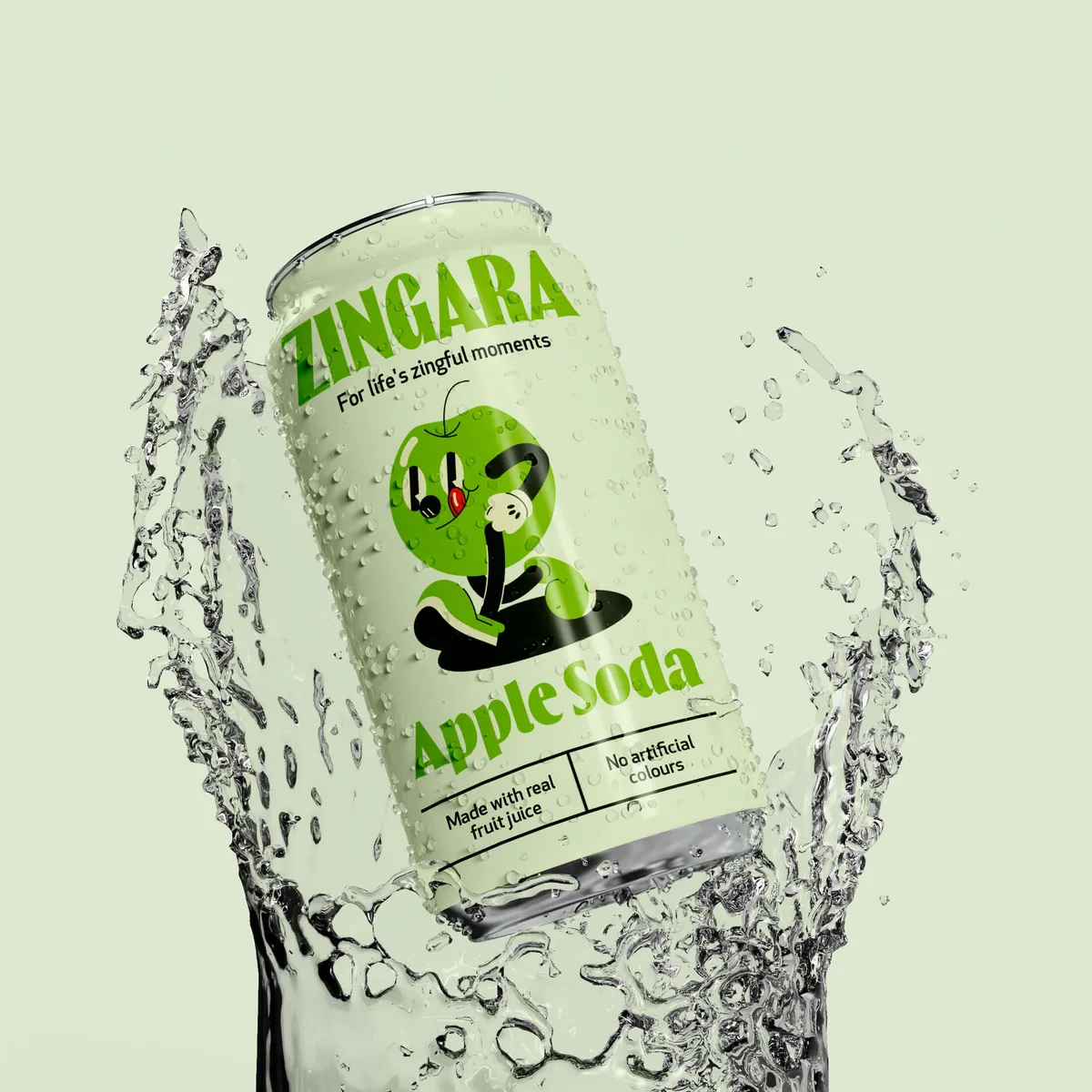


The strongest challenger brands aren't rebels without a cause. They don't challenge category conventions because it's trendy, and they certainly don't do it for attention alone. They challenge them because somewhere along the line, the category stopped helping consumers and started producing carbon copies.
At Noramble, that's the stuff that gets us excited. We believe brands deserve better than blending into the background. The most successful brands understand which conventions build trust, which clichés create complacency and where genuine opportunities for distinction exist.
In increasingly crowded markets, meaningful differentiation is a commercial necessity. The brands that thrive won't be the ones shouting the loudest. They'll be the ones brave enough to stand for something.
If your category feels crowded and your competitors look increasingly alike, it may be time to rethink the rules. Get in touch with Noramble to explore how brand strategy, design and packaging design can help your business stand apart for the right reasons.


