
Your brand strategy has a job to do. A decent brand strategy isn’t just something you dust off before a rebrand or stick in a PowerPoint that never sees daylight again. It’s the thing that keeps every decision pointing in the same direction, helping you build a cohesive brand design across your packaging design, website, social posts and customer service.
Without one, it’s easy to end up making it up as you go along. And while that might work for a bit, it rarely builds a brand people remember.
Whether you're starting from scratch or giving an established business a fresh lease of life, these ten questions will help you get clear on what your brand stands for, who it's for, and why anyone should care.
Every business wants to make money. That's kind of the point. But your brand purpose is about the reason you exist beyond the sales figures.
It's easy to confuse purpose with your mission or vision, but they're all doing very different jobs. Your purpose is your why. Your mission is what you're doing right now to achieve it. Your vision is where you're heading.
Consumers are increasingly drawn to brands that stand for something. Whether it's sustainability, innovation or just simply making everyday life easier, people like buying from businesses whose values line up with their own internal values. Simon Sinek's famous Golden Circle starts with exactly that idea: people buy why you do something, not just what you sell.
A clear purpose also makes decision-making a lot easier for both your brand and customers. It shapes your messaging, influences new product development and even impacts how your packaging design looks and feels. If your purpose is making premium products accessible, your design should communicate that before anyone even picks it up.


One of the biggest mistakes brands make is thinking demographics tell the whole story.
Knowing your customer is 35, lives in Manchester and has two kids is useful. Knowing they're constantly short on time, care about sustainability and are willing to pay more for convenience? That's where things get a lil’ more interesting.
A strong brand strategy goes way beyond age, location or income. Demographics only tell you so much. It's about understanding what's really driving people to buy. What problem are they trying to solve? What are they hoping to achieve? And what's getting in their way? Clayton Christensen's Jobs to Be Done framework flips the usual thinking on its head. The idea is simple: people don't just buy products/services – they hire them to help make progress in their lives. That progress might be practical, emotional or even social. Once you understand the job your customers are hiring your product/service to do, it's much easier to build a brand, message and packaging that genuinely connects.
Personas can be handy, but they're only useful if they're based on real research rather than guesswork.
Understanding your audience shapes everything from your tone of voice to your packaging design. If your customers value premium quality, your packaging needs to feel premium. If convenience matters most, don't make them wrestle with opening it.

People rarely buy products just because they exist. They buy them because they solve a problem in their lives.
Sometimes that's practical. A reusable water bottle keeps drinks cold all day without having to trek for a refill every 5 minutes.
Sometimes it's emotional. Buying from a luxury skincare brand might make someone feel more confident or help them carve out a bit of self-care during a busy week.
Your value proposition should connect what you offer with the outcome your customers actually want. That's the thinking behind Value Proposition Design, focusing less on product features and more on the value people get from them.
Your packaging and messaging should reinforce that value too. If you're selling convenience, don't wrap your product in six layers of plastic when a lower-waste solution could do the job better. The experience should match the promise.

Standing out is about giving people a reason to remember you. This doesn’t have to be flashy or loud, it just needs to make sense for your brand.
A strong brand positioning strategy identifies a space your brand can genuinely own. That doesn't necessarily mean being better than your competitors, often it's simply about being different in a meaningful way.
That starts with understanding what's already happening in your market. Look at what competitors are saying, how they present themselves and what customers already associate with them. Then look for the gaps.
It's also worth remembering that you're not always competing with businesses in your own category. Brand boundaries are much blurrier than they used to be. Fashion brands are moving into homeware, beauty brands are becoming lifestyle brands, and food brands are building communities around health and wellbeing. Customers compare experiences across industries, not just products on the same shelf. That means opportunities often exist in the spaces between categories, where you can borrow ideas, challenge expectations and create something people haven't seen before.
Distinctive brand assets, like recognisable colours, packaging, typography or even the way you write, help people spot your brand instantly. Byron Sharp describes distinctiveness simply as "a brand looking like itself," while Jenni Romaniuk's research shows that consistently using these recognisable assets builds memory over time, making your brand easier to notice, recall and choose.


If your brand walked into the pub, what would it be like? How would it present itself?
Confident? Funny? Straight-talking? No fluff? Premium? A bit quirky?
Brand personality helps people connect with businesses on a more human level. It influences everything from your tone of voice, to your visual identity, customer service and marketing. The key to it all is staying consistent with it all.
Your packaging should absolutely lean into personality too.
Whatever personality you choose, consistency is the only thing that’s going to make it believable.


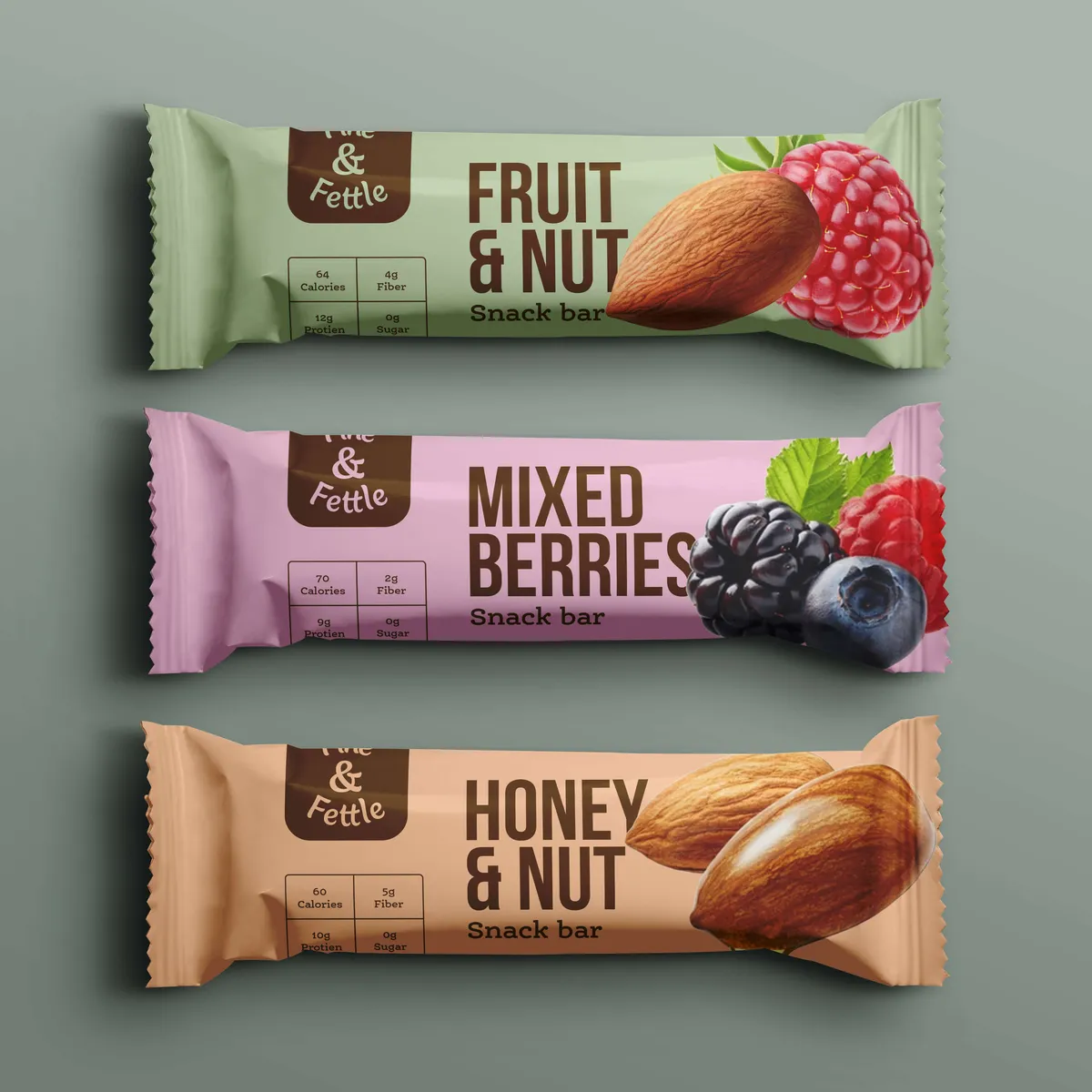

By now, you should know that brand identity rides on a whole lot more than just a logo.
It's your colours, typography, imagery, icons, layouts, photography style, packaging, website and every other visual cue customers come across.
When these elements work together, they create recognition. That means people are able to start spotting your products without even seeing the logo.
Good design systems also make life easier internally because everyone knows how the brand should appear across every touchpoint.
Accessibility deserves a mention too. Colours need enough contrast, typography should be easy to read and packaging should be clear rather than clever for the sake of it. Don't underestimate the power of white space either – cramming everything onto a label makes life harder for everyone. Good accessibility means considering people with visual impairments, colour blindness, dyslexia and other accessibility needs from the outset, not as an afterthought. The easier your brand is to read, understand and navigate, the more people you can connect with. After all, the last thing you want is to unintentionally shut potential customers out.


Every brand makes a promise, whether it's written down or not.
It might be making healthy eating easier or maybe it’s offering the quickest service in the market.
The important bit is making sure you can actually deliver it. Don’t make promises you can’t keep.
Trust is built when expectations match reality, and lost pretty quickly when they don't.


Customers don't experience your brand in one place and this is something a lot of brands don’t take into consideration when they’re working on a brand strategy.:
Think about all the different places someone could come across your brand:
👉 A recommendation from a mate
👉 A Google search
👉 A TikTok review
👉 Walking past your product on a supermarket shelf
👉 An influencer using it without even mentioning your name
👉 Browsing your website
👉 Signing up to your emails
👉 Seeing your advert on a bus or billboard
👉 Receiving your product in the post
👉 Opening the box (your unboxing experience)
👉 Reading the instructions or label
👉 Contacting customer support
👉 Returning a product
👉 Reading Trustpilot or Google reviews
👉 Seeing your packaging in someone else's house
👉 Spotting one of your delivery vans on the motorway
👉 Receiving an invoice or order confirmation
👉 Even hearing how your staff answer the phone
Every single one of these moments shapes how people perceive your brand. Some last a few seconds, others leave a lasting impression.
Customer journey mapping helps you step into your customers' shoes and identify where those interactions happen. The best brands don't just focus on the big moments, they sweat the small stuff too. Because often it's those tiny details that make someone remember you... or forget you.
Packaging plays a bigger role here than many businesses realise. It's often the first physical interaction someone has with your brand, so it needs to leave the right impression.

The strongest brands don't sit still.
Markets change, customer expectations evolve and businesses naturally expand into new products or services. Your brand strategy needs enough flexibility to grow without losing what makes it recognisable.
That might mean developing a clear brand architecture if you're launching multiple product ranges, entering new markets or creating sub-brands.
There's a difference between refreshing a brand and completely rebranding too. Sometimes you only need to modernise how you look. Other times, changing direction calls for a bigger rethink.
The trick is evolving without confusing the people who already know and trust you.


Branding should deliver measurable results, including sales.
We’re not just talking about sales here. It could also mean increasing brand awareness, improving customer loyalty, growing market share or strengthening brand equity over time.
Regular brand audits can also help you spot inconsistencies before they become bigger problems.
The best businesses don't treat branding as a one-off project. They keep measuring what's working, listening to customers and refining things as they grow.
Because if you don't know what success looks like, it's pretty hard to know whether your strategy's actually doing its job.

Answering these ten questions gives your brand something solid to build on. Instead of making decisions based on gut feel or whatever's trending this month, you've got a clear strategy guiding everything from your messaging to your packaging.
Get the foundations right from the very start and every future decision becomes far more likely to move your business in the right direction. That's when branding starts to become a proper commercial advantage.
Whether you're starting from scratch, planning a rebrand or want packaging that reflects what your business is really about, we'd love to help. At Noramble, we work with brands to turn big ideas into packaging and identities that people notice. Fancy a chat?


